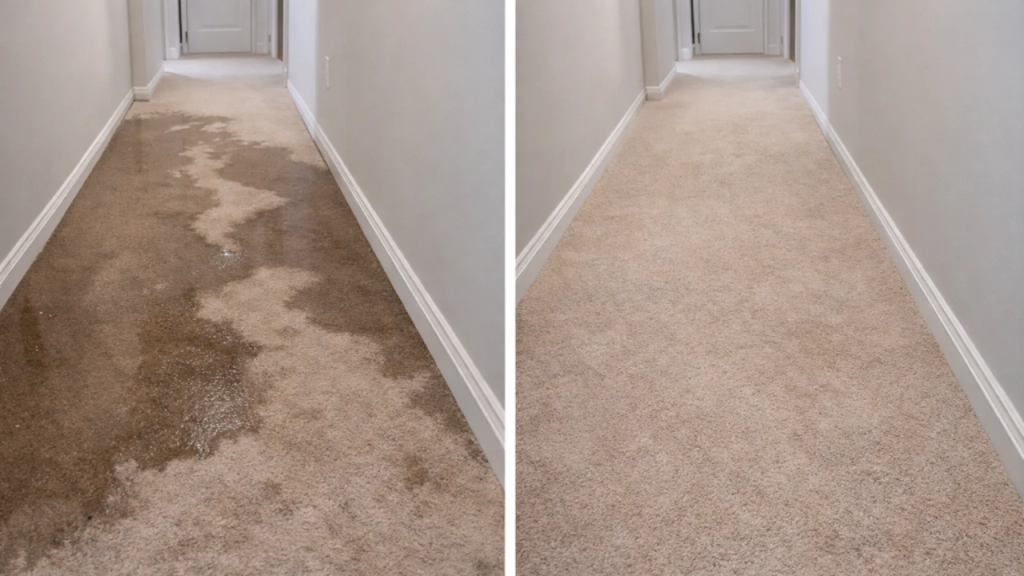
A flooded carpet needs attention as soon as it is safe to act. Water can soak through the carpet into the underlay and flooring beneath, leaving moisture that ordinary surface drying cannot remove. The longer it remains, the greater the risk of mould, unpleasant odours and damage that may require replacement.
For anyone dealing with a burst pipe, stormwater or indoor flooding, the first 24 hours are an opportunity to limit the damage. Here is what to do, in order, and when professional flooded carpet cleaning in Sydney may be necessary. The hourly stages are a guide, not fixed deadlines, as safety and the extent of flooding determine how quickly work can proceed.
Make the area safe
Before attempting any clean-up, identify where the water is coming from. If a pipe has burst, turn off the main water supply if you can reach it safely. Following external flooding, wait until authorities confirm it is safe to return.
Water and electricity are a dangerous combination. Avoid wet power points, appliances and electrical cords. Never touch electrical equipment while standing in water. If the electrical installation has been affected, arrange an inspection by a licensed electrician before restoring power.
NSW Health’s flood safety guidance advises against handling wet electrical equipment or using appliances that have been affected by flooding.
Once the area is safe, identify the likely water source. A burst clean-water supply pipe presents different restoration concerns from contaminated stormwater or sewage.
When water has soaked through to the underlay, spread across several rooms or comes from a potentially contaminated source, emergency flooded carpet cleaning may be necessary to assess the damage. Contaminated materials may require removal rather than cleaning.
Document the damage and remove water
Before moving anything, photograph the affected carpet, surrounding furniture and visible water damage. Take wide shots of the room and closer images showing the extent of saturation.
The Insurance Council of Australia recommends documenting damage before cleaning up and contacting your insurer promptly. Ask what records or approvals are needed before arranging repairs or disposing of damaged materials.
If the water is known to be clean and the area is electrically safe, begin removing standing water.
A wet vacuum designed for water extraction may help with a small, contained incident. Never use an ordinary household vacuum cleaner, as it is not designed to collect water.
Move lightweight furniture to a dry, safe location. Avoid dragging heavy items across wet carpet, which may damage the backing or stretch the material.
Do not attempt DIY extraction if the water contains sewage, mud or unknown contaminants. Keep people and pets away from the affected area until it has been assessed.
Start drying the carpet and room
Once standing water has been removed, the next concern is moisture trapped beneath the surface.
Open windows and doors when outdoor conditions are dry and safe. Fans and dehumidifiers can assist drying, provided the electrical supply and equipment are safe to use.
A carpet that feels dry to the touch may still have saturated underlay. Professional flooded carpet cleaning in Sydney may involve specialised water extraction, moisture assessment, and drying equipment, depending on the extent of the damage.
Avoid placing furniture back on damp carpet or covering wet areas with rugs, as this can restrict airflow.
NSW Health’s household flood clean-up guidance recommends drying affected areas promptly and removing wet floor coverings where necessary. The floor beneath should be thoroughly cleaned and dried before replacement materials are installed.
Check whether the carpet can be saved
Not every flooded carpet is suitable for restoration. The water source, carpet material, duration of exposure and condition of the underlay all affect the outcome.
Clean water from a burst supply pipe: Restoration may be possible if the water is removed promptly and the affected materials can be thoroughly dried.
Stormwater or sewage: Floodwater may contain sewage, chemicals and other contaminants. Affected carpets and underlay may need to be removed, particularly where thorough cleaning and decontamination cannot be achieved.
Water trapped beneath the carpet: A saturated underlay or flooring may require specialist assessment, drying, or replacement, even after visible water has been extracted.
Avoid applying household bleach or strong cleaning chemicals directly to the carpet without appropriate guidance. These products may damage fibres and cannot make every contaminated material suitable for reuse.
A professional assessment should establish whether cleaning and drying are appropriate or replacement is the safer option.
Assess progress and prevent further damage
By this stage, the priority is to check whether the initial response is working and to identify any areas that need further attention.
Look for signs that moisture or damage remains:
- Damp patches that persist despite ventilation
- A musty smell developing in the room
- Water marks around skirting boards
- Carpet lifting, rippling or separating from its backing
These signs warrant further investigation. Evolution of Photo Booth Experiences Their absence, however, does not confirm that the flooring is completely dry.
If dampness persists, moisture testing can help identify affected areas and guide further drying or removal.
The first 24 hours are not a guaranteed drying deadline. Some materials take longer, while heavily contaminated carpets may be unsuitable for restoration regardless of how quickly work begins.
Conclusion
Acting promptly after a carpet flood can reduce further damage, but safety and the water source must guide every decision.
For homeowners considering flooded carpet cleaning in Sydney, checking the carpet, underlay and flooring is the practical next step when surface drying is insufficient. The earlier the extent of the damage is established, the sooner an appropriate restoration or replacement decision can be made.