If you’ve considered straightening your teeth but feel unsure about wearing noticeable braces, discreet treatment options may be worth exploring. “Invisible braces” is a broad term for less noticeable orthodontic appliances, including clear aligners.
These options give patients more flexibility over how treatment looks and fits into everyday life. The right choice still depends on your dental needs and a professional assessment.
What does “invisible braces” actually mean?
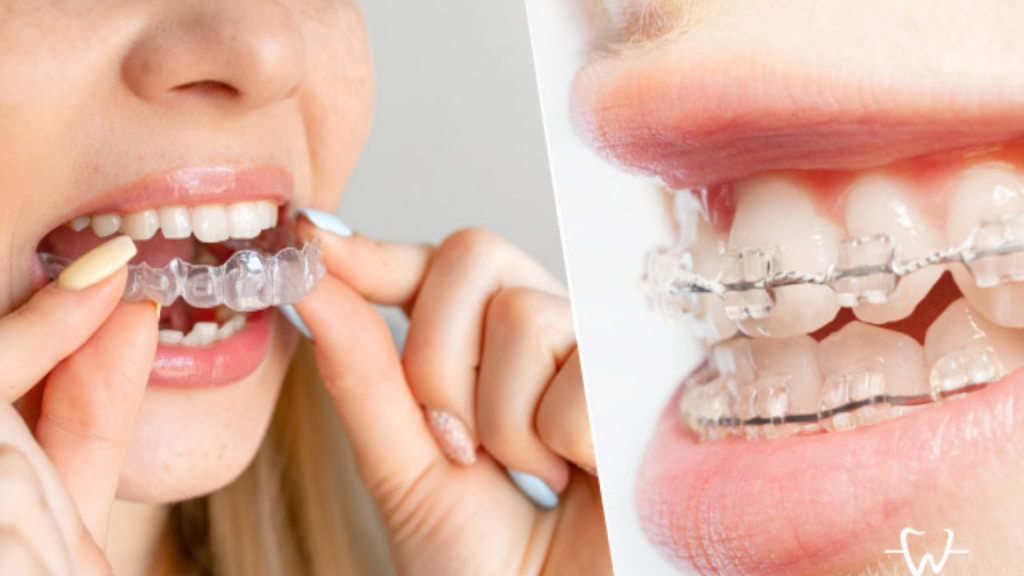
Clear aligners are custom-made plastic trays worn over the teeth. A series of trays gradually moves teeth according to a treatment plan, with each set replaced as directed by the treating clinician.
The term “invisible braces” can also describe ceramic braces, which use tooth-coloured brackets, and lingual braces, which are fitted to the inside surfaces of teeth. Both stay attached throughout treatment, while clear aligners can be removed by the patient. These appliances are designed to be less noticeable, although “invisible” should not be taken literally.
How treatment fits into daily life
For someone who feels self-conscious about metal braces, a discreet appliance may make the prospect of treatment more appealing. Appearance can matter particularly at work or during social occasions, even when the person is otherwise comfortable with the treatment involved.
Clear aligners also change the routine around eating and cleaning. They come out for meals and drinks other than water, and patients can brush and clean between their teeth without having to work around fixed brackets and wires. The trays need regular cleaning too.
Being removable does not mean aligners can be worn only when convenient. They need to be worn consistently according to the clinician’s instructions. Someone who regularly snacks or sips coffee throughout the day will need to plan those habits around treatment, rather than leaving the trays out for long periods.
Fixed appliances remove the need to remember to put trays back in. They do, however, require careful cleaning around the brackets and wires. The practical question is which routine you can reliably maintain.
Digital planning makes proposed changes easier to understand
Digital scanning and computer-based planning have changed how orthodontic treatment can be explained. A scan creates a three-dimensional model of the teeth, helping the clinician plan movements.
For clear aligners, this plan guides the production of the custom trays. Viewing the proposed stages on a screen can also help patients understand how their teeth are intended to move and why treatment involves a sequence of aligners.
Digital records can support progress reviews by helping clinicians compare tooth positions with the treatment plan. A simulation shows planned movement, however, rather than a promised result. Ongoing checks are still needed to assess the response to treatment and decide whether adjustments are necessary.
Suitability involves more than the front teeth
A small gap or crowded front tooth may prompt someone to seek treatment, but the assessment looks beyond the visible concern. Find the Best tickets for sports events The clinician also checks how the upper and lower teeth meet and whether the teeth and gums are healthy enough for treatment.
Clear aligners can address a range of orthodontic concerns. Some cases call for fixed braces or a combination of approaches, depending on the movements required. Choosing a less noticeable appliance does not automatically mean treatment will finish sooner; the extent of the correction and how treatment progresses affect the timeframe.
What to ask before deciding
Ask your clinician to explain the recommended approach and what you will need to do between appointments. You should also receive a clear breakdown of the fee, including whether additional aligners or post-treatment care could involve extra charges.
Retainers belong in that discussion from the start. Teeth can move after straightening, so find out how their position will be maintained and what ongoing retainer wear will involve.
If you’re exploring invisible braces in Parramatta, arrange a consultation to discuss your concerns and have your suitability assessed.