
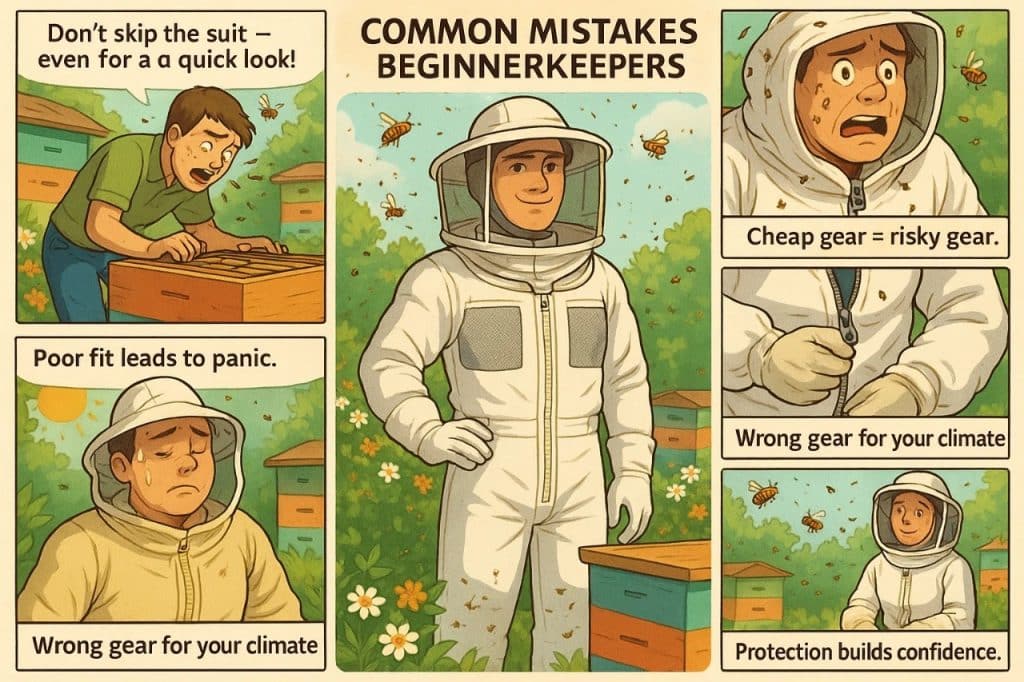
Start smart. Stay safe. Here’s what every new beekeeper should avoid — and how professional beekeeping suits can be your first line of defense.
Beekeeping is a magical hobby. It connects you to nature, helps the environment, and even sweetens your life — literally. But for beginners, it can also be intimidating, unpredictable, and sometimes painful if you’re not prepared.
Ask any experienced beekeeper, and they’ll tell you: those early days are full of rookie mistakes that can cost you your comfort, your confidence, and in some cases — your safety.
In this guide, we’re unpacking the most common mistakes new beekeepers make — and more importantly, how you can avoid them by using the right practices and professional beekeeping suits designed to protect you from Day One.
1. Underestimating the Bees (and Overestimating Yourself)
Many new beekeepers start off overly confident. You’ve watched a few YouTube videos, joined a forum or two, and maybe read a book. Seems simple, right?
But bees are wild creatures. They’re sensitive to smells, weather, your movements — and your energy. Approach a hive without understanding their mood or rhythm, and you might get stung before you even open the lid.
Stay Protected:
Even seasoned beekeepers suit up before approaching a hive. If you’re just starting out, always wear full-body protection, including gloves and veils. No shortcuts.
Modern professional beekeeping suits are breathable, lightweight, and made to give you full coverage without suffocating you in the summer heat.

2. Choosing Cheap or Incomplete Gear
This one stings — literally. Many beginners make the mistake of buying budget gear or mixing and matching used pieces. The result? Gaps in protection, ill-fitting gloves, or veils that don’t stay in place.
What goes wrong:
- Zippers that break mid-inspection
- Mesh that tears easily
- Gloves too stiff to feel frames
- Gaps around the ankles, wrists, or neck
The Solution:
Invest in professional beekeeping suits made specifically for full protection. Look for:
- Triple-layer ventilated fabric
- Reinforced seams and zippers
- Elastic wrist and ankle closures
- Comfortable yet sting-proof gloves
- Fencing-style or round veils with secure attachment
Remember, this isn’t just about convenience — it’s your first line of defense.
3. Ignoring the Importance of Fit and Comfort
A beekeeping suit shouldn’t just “cover” you — it should move with you. Beginners often wear oversized suits thinking more coverage equals more protection. But loose, floppy suits can:
- Get caught on hive parts
- Let bees crawl in through the gaps
- Limit visibility and precision
What to do instead:
Choose a suit that fits your frame but still allows air circulation. Many professional beekeeping suits come in unisex sizes with adjustable straps, zippered ankles, and elastic thumb loops to keep everything secure.
Good fit = less fidgeting = fewer bees getting agitated.
4. Not Suited Up When It’s “Just a Quick Look”
This one gets a lot of first-timers. You think, “I’ll just peek inside the hive. No big deal.” So you skip the gloves. Or leave your veil unzipped. Or worse, inspect in shorts and sandals.
Spoiler alert: that’s how most surprise stings happen.
Smart beekeepers know:
Even a quick inspection can lead to surprises. Bees can get aggressive if:
- Weather is too hot
- Nectar flow is low
- You move suddenly or drop a frame
- Their queen has recently died
Moral of the story?
Always suit up — even for “just a second.” Today’s professional beekeeping suits are designed for fast wear and easy removal, so there’s no excuse.
5. Not Considering Climate When Choosing Gear
Many beginner beekeepers buy the first suit they see online without considering how it’ll perform in their local weather. A thick canvas suit might protect you in cool climates but leave you drenched in sweat in Georgia or California.
Climate-smart gear tips:
- Hot/humid areas: go for ultra-ventilated suits with breathable mesh panels
- Colder regions: choose modular suits that allow layering underneath
- Rainy zones: waterproof veils and quick-dry gloves are a must
Pro tip: Some of the best professional beekeeping suits offer moisture-wicking linings and heat-reflective exteriors for year-round flexibility.
6. Forgetting That Bees Can Find Weak Spots
Yes, bees are small — and sneaky. One tiny opening in your gear, and they’ll find a way in. That means:
- Unzipped veils
- Loose pant cuffs
- Gaps in gloves
- Poorly fitted hoods
Why pro suits matter:
Premium suits come with double-stitched seams, overlapping zippers, and elastic closures that prevent bees from entering — even during a full-on defensive swarm.
7. Not Respecting the Learning Curve
Beekeeping looks peaceful on Instagram. But in reality, it’s an evolving craft. You’ll make mistakes, drop tools, and maybe even panic the first time a bee lands on your veil.
What matters most:
Starting with confidence and the right protection. When you know your gear has your back — literally — you can move slower, stay calmer, and learn more effectively.
Wearing a professional beekeeping suit helps create a barrier not just from bees, but from fear. And that’s exactly what you need as a beginner.
Final Buzz: Gear Up for Success from Day One
Beekeeping isn’t just about the hive — it’s about how you show up to the hive. And the biggest beginner mistake you can make is not taking your protection seriously.
Instead of learning the hard way, set yourself up for success by investing in professional beekeeping suits that protect your body, boost your confidence, and let you focus on the craft — not the stings.
So go ahead. Suit up. Step in. And make your first season unforgettable — for all the right reasons.