
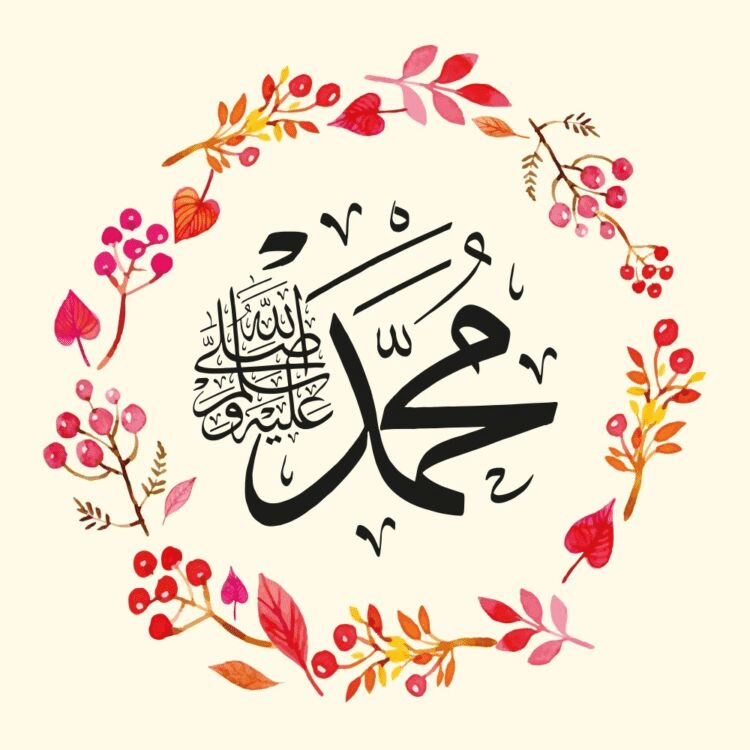
In Islamic tradition, literature, and discourse, the Prophet Muhammad (peace be upon him) had many titles for his character, behaviour, and mission. And these names are not just names, they are names referred to with deepest devotion, affection, and anointing of praise of his supreme majesty. For Muslims the world over, the Prophet is not just the last messenger, but the exemplary man. One way in which this perception is regarded is the beautiful tradition of addressing him with praiseworthy appellations. While the names of Allah are of course famous, one might not realise that there are also 99 names of Muhammad (PBUH), signifying a different facet of his being and mission.
Know the 99 Names of Muhammad
History The 99 names of Muhammad refers to the list of names and attributes of the Islamic prophet Muhammad (PBUH) and also other prophets like Hazrat Isa and Hazrat Musa, not his 99 names, but 99 descriptors. It is not mentioned as a whole in the Qur’an, however it is derived from the word “salaah” and several hadith mentioning the phrase in its proper context are in circulation, while some scholars have gathered examples of this are from various hadiths and this version originates from numerous authentic sources including the Qur’an, hadith, and the works of many highly regarded Muslim scholars. Every name is focused on one particular aspect of the Prophet -his mercy, his power, his wisdom, his leadership, his teaching, his guidance and his servitude to Allah.
Since the 99 names of Allah (Asma’ul Husna) are intended to be understood by believers as the characteristics of the Creator, they are equivalent to a way to contemplate the Prophet’s ideal nature in the 99 names of Muhammad. Muslims love and connect to these names, and use them in poetry, in supplication and in learning. Al-Mustafa, Al-Amin, Habibullah – beyond being titles, these are windows into the personality and life of the greatest human being to have ever graced the Earth.
Why the Names Matter in Islamic Culture
In Islam, names are very significant. They are not only labels but reflections of character and legacies. The 99 names of Muhammad are part of a Muslim practice that also serves as a way for Muslims to honour and remember Muhammad and deepen their relationships with his example. When the faithful rehearse or meditate upon these names, they recall His mercy, His patience, His justice, and His envoiement of the message of Islam. This memory reinforces the spiritual relationship between the Prophet and his people, inviting them to be like him in their daily behaviour.
These names have been glorified by thousands of Islamic scholars and poets, who have written many works glorifying these names, such as nasheeds, duas & stories. In certain cultures, the names are in the anticipation that children will learn how to recite them, as part of early religious education. Not only does the practice encourage reverence for the Prophet, but it also imparts moral principles at an early age. To know the names is to know the man who, with his love, humility and unshakeable faith, changed the course of history..
Examples and Definitions of the Names
The 99 names of Muhammad range from those that everyone knows, to those which are less known but are also as beautiful. To demolish disbelief, remove wrong and right, the decree of the True One is called Al Mahi. Al-Nabi, “the Prophet,” is a term that reiterates his divine role. Al-Rasul, “the Messenger”, indicates his role as the conveyor of the message of the Qur’an. Al-Mujtabah, “The Chosen One,” stresses that Allah had favoured him. Al-Mudathir, the cloaked one, and Al-Muzzammil, the wrapped one, are names out of the Qur’an itself, taken from the early chapters that emphasise the start of his prophethood.
Every name has so much meaning and context behind it. During the pilgrimage, for example, Al-Shafi (The Intercessor) deals with the Prophet’s capacity to intercede for his ummah (community) when they stand to judgment on the Last Day. Al-Bashir (The Bringer of Good News) – a name that denotes his presentation of good news of paradise to the believers. These are not just eloquent titles; they are descriptions of the actions of the Prophet and the spirituality he left behind.
Names in Devotion and Worship
Palmyra74/1 Reciting Prophet Muhammad (PBUH) names is are devotional act, RELIGION – Awulul Achini (The Making or Running of the Race). Memorising all 99 names of Muhammad is not a religious requirement, but one many Muslims practice out of love for their faith and the Prophet. Some print the names on a daily prayer card; others do calligraphy or hang them on the wall. The names are also used in spiritual practices such as outward salawat (supplication stated to be recited upon the Islamic prophet Muhammad – recommended in Islam, and is also a means of gaining great reward).
The 99 names of Muhammad are a crucial part of Sufism and are always referred to in the poetry and the practice of Sufism. Dhikr focuses the believers on the model qualities of the Prophet (peace be upon him), trying to build these qualities into their own characters. As such, both the names are reminders and goals—a model of development, both personal and spiritual.
Conclusion
The 99 names of Muhammad (PBUH) provide us a vital and immediate way to grasp the life and character of Islam’s last prophet. These are the names of love, light, compassion, strength and leadership. They also remind us that the Prophet Muhammad was not just a historical figure, but an eternal exemplar whose life story is directly relevant to every era. MEDITATING ON THESE NAMES WE LEARN: To meditate on these names is drawing us closer to him and gives us insight on what it means to follow his path.