
Key Takeaways
- Antique chess sets reflect artistry, culture, and historical context.
- Luxurious materials and hand-carving enhance both beauty and value.
- Iconic sets like Lewis Chessmen, Staunton, and Dubrovnik highlight design innovation.
- Regional and cultural influences shape distinctive styles and motifs.
- Modern luxury sets combine precious materials with artistic craftsmanship.
- Collectors value sets for historical significance, aesthetic appeal, and rarity.
- Chess sets serve as both functional games and collectible works of art.
Throughout the ages, chess sets have served as more than functional boards for strategic competition. They are windows into the artistry, culture, and imagination of their makers. Each piece, from king to pawn, often tells a story reflecting the era or location in which it was crafted. For collectors and history enthusiasts alike, exploring famous antique chess sets opens up a world where craft and history intersect.
Also Read: Evolution of Photo Booth Experiences at Modern Events
Some sets captivate through their luxurious materials, while others reveal exquisite detail in their hand-carved forms. Whether made from humble materials or precious stones, they all contribute to the storied legacy of chess. Their designs are shaped by cultural influences, historical events, and the personal vision of the artisans who crafted them.
This journey through the most intricately carved chess sets in history uncovers the stories behind the world’s most beloved and beautiful chess pieces. Along the way, we encounter legendary designs, cultural fusions, and displays of unmatched luxury.
The Lewis Chessmen: A Medieval Masterpiece
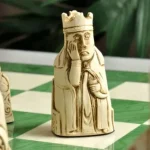
Unearthed on the Isle of Lewis in Scotland in 1831, the Lewis Chessmen immediately amazed historians and chess enthusiasts alike. These 12th-century pieces are carved from walrus ivory and whale teeth, each figure featuring individual expressions and intricate details in their robes and face. Comprising kings, queens, bishops, knights, rooks, and pawns, the set is a vivid reflection of medieval Norse society. The mystery surrounding their exact origin, whether from Norway or Scotland, only heightens their allure.
The Charlemagne Chessmen: A Blend of Cultures
The Charlemagne Chessmen, now safeguarded in the Bibliothèque nationale de France, date back to the 11th century. These ivory pieces showcase not just workmanship, but a cultural crossroads, combining European, Arabic-Islamic, and Byzantine influences. The kings and queens are clad in elaborate armor and attire, and each figure is a testament to the vibrant artistic exchanges of the medieval world. These chessmen are a striking example of how chess traveled and evolved across continents.
The Dubrovnik Chess Set: A Modern Classic
First introduced at the 1950 Chess Olympiad in Dubrovnik, Yugoslavia, the Dubrovnik Chess Set is noted for both beauty and functionality. Designed with wide bases and smooth, minimalist curves, it avoids religious symbolism and emphasizes clarity and usability on the board. Legendary chess champion Bobby Fischer famously declared this his favorite set. Its clean design and excellent playability make it a staple for serious players and collectors alike.

The Staunton Chess Set: The Standard Bearer
When Nathaniel Cooke debuted his Staunton Chess Set design in 1849, chess was forever changed. Endorsed by master Howard Staunton, this set quickly became the world standard for tournament play. The pieces are simply and elegantly carved, making them instantly recognizable and easy to use. The knight, modeled after the Elgin Marbles’ horse heads, is the set’s most celebrated feature thanks to its lifelike detail. The enduring popularity of Staunton sets highlights the impact of smart, timeless design.
The Tamerlane Chess Set: A Persian Treasure
Originating in 14th-century Persia, the Tamerlane Chess Set is also known for its unique gameplay, with an 11×10 board and additional pieces such as the “camel” and “giraffe.” These sets, crafted from ivory and rare woods, feature elaborate hand-carvings that reflect both Persian artistry and subtle Islamic motifs. Their rarity and complex rules make them a prized item for connoisseurs of both chess and decorative arts.
The Gdańsk Amber Chess Set: A Polish Gem
In 17th-century Gdańsk, Poland, amber workers created chess sets that were as much jewelry as game pieces. Carved from luminous Baltic amber, each piece is uniquely patterned and hand-polished, displaying golden hues and translucent layers. These remarkable sets are testaments to local artistry and remain highly valued by museums and private collectors. Their natural elegance and beauty are intrinsically tied to the traditions of the Baltic region.
The Art of War Chess Set: A Modern Marvel
By marrying classical styles with luxurious materials, Victor Scharstein’s Art of War Chess Set stands out as a modern masterpiece. Featuring an ebony board inlaid with gold and rhodium, the solid gold pieces are further embellished with gems such as diamonds, emeralds, rubies, and sapphires. This set is not just a game, but a gallery-worthy work of contemporary craft, attracting attention from collectors and lovers of fine objects.
The Jewel Royale Chess Set: The Pinnacle of Luxury
The Jewel Royale Chess Set is regarded as the world’s most opulent, with a price tag nearing $10 million. Handcrafted in Great Britain, it features solid gold and platinum pieces adorned with diamonds, rubies, sapphires, emeralds, and pearls. Each figure, particularly the king, balances weight, precision, and radiance, representing the ultimate intersection of wealth and artistry in chess. This unparalleled luxury set is widely regarded as a milestone in bespoke crafts and precious design.
Final Thoughts
Across centuries and cultures, intricately carved chess sets have told stories, showcased skills, and delighted collectors. Their variety and ingenuity illustrate the continuous human fascination with the intersection of strategy, art, and history. Today’s greatest sets maintain this rich dialogue, standing as monuments to the imagination and mastery of their creators.